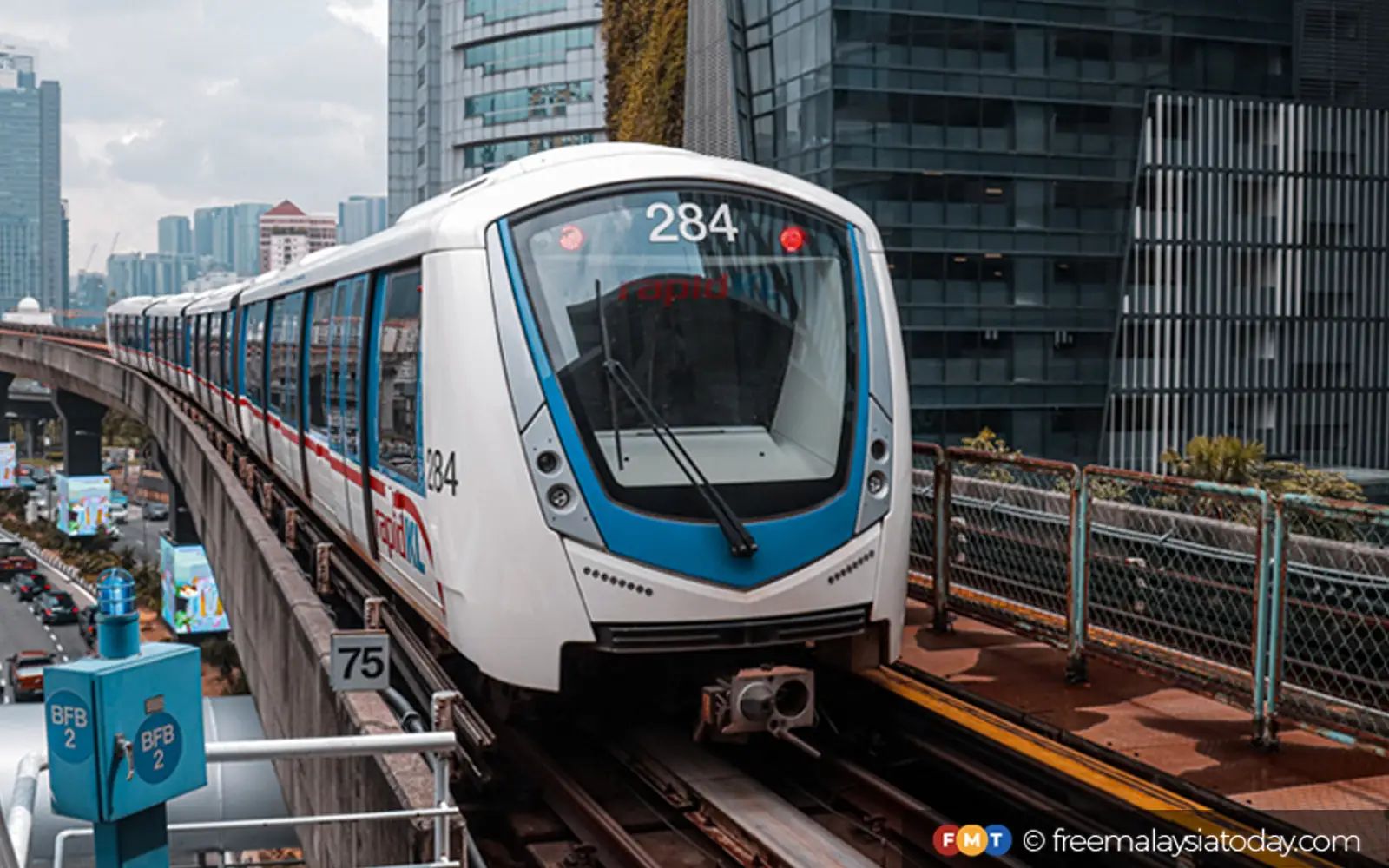
Amir said that the current phase includes trial runs, fault-free runs (FFR) and trial operations.
“As the operator, we are ready to operate the LRT 3 safely once the train assets have been fully handed over to us by the project team,” he told a press conference at the Shah Alam LRT station today.
Patrick Hwang, LRT 3 project director from Setia Utama LRT 3 Sdn Bhd, said the company began the FFR trial on Aug 26.
Under regulations, he said that one “Golden Train” must complete 4,000km without error. Five trains must complete 3,000km, and the remaining 18 trains 2,500km each without glitches.
The Golden Train target has been achieved, while three trains have achieved the 3,000km objective, with the remaining 18 trains still undergoing FFR.
Hwang said 33 issues had been identified during testing, mostly technical problems that could be fixed via software patches.
Other issues included trains failing to dock accurately at platforms, departure failures, and doors not opening automatically, he added.
“We’re prioritising stress testing in order to have a safe and reliable rail system. The test will now be conducted with a higher intensity over a longer period of time.
“The objective is to identify potential issues early on, to prevent any failure once the system is offered to the public,” he said.