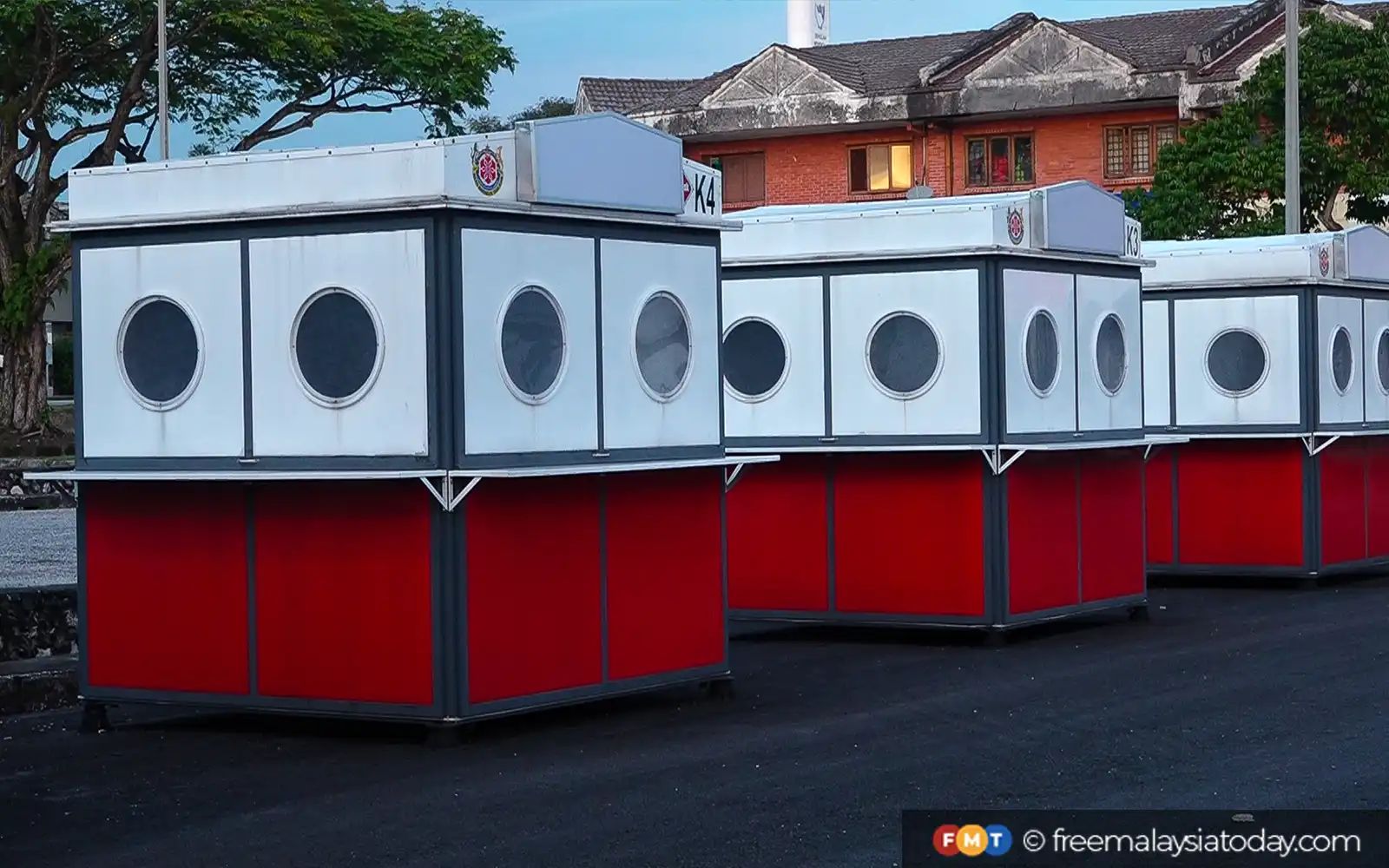
The housing and local government ministry said today the directive was issued following a Malaysian Anti-Corruption Commission report that identified weaknesses in the initiative, including the lack of a uniform monitoring mechanism to assess its impact.
The initiative is aimed at providing traders with a safe and comfortable space to operate their businesses, and to improve the image of roadside stalls.
“The local authorities’ performance will be assessed using a ‘traffic light’ system.
“Those that fail to meet their key performance indicators (KPIs) for unit take-up and operations (red status) may have their allocations cancelled. Local authorities that perform well (green status) will receive additional incentives,” the ministry said in a statement.
It said the assessments would be conducted by its local government department and presented to the ministry every quarter.
“Local authorities are also encouraged to relocate MyKiosk units that have received a low response to locations with higher footfall to optimise asset use,” it said.
Yesterday, MACC said it found that the ministry had failed to conduct a proper needs assessment before the launch of the MyKiosk initiative.
It said this was one of several weaknesses in the programme, which had been described as a white elephant after allegedly failing to meet the objectives and causing public inconvenience because of poorly located kiosks.
The ministry clarified that local authorities acted as its primary agencies in the initiative’s implementation, and that they were fully responsible for determining strategic locations for the units, appointing eligible traders and maintaining the facilities.
It also denied claims that the project was a white elephant, saying checks with local authorities as of July last year found that the first phase recorded a 91.75% take-up rate, while the second phase reached 86.75%.
It said the initiative had helped raise the household income of more than 7,000 hawkers nationwide, with some making up to RM30,000 a month.
Among the governance improvement recommendations presented by MACC to the ministry on Monday were incorporating the project’s outcomes into KPIs and establishing a special committee to monitor its effectiveness.
They included enhancing the guidelines covering procurement, management and monitoring, as well as creating a comprehensive guideline for implementing federally funded projects to serve as an operational reference.
Launched in 2023, the initiative came under fire from MCA Youth for its allegedly low adoption rate, particularly in areas under the Shah Alam and Petaling Jaya city councils.
Former MCA vice-president Ti Lian Ker also called on housing and local government minister Nga Kor Ming to resign following MACC’s report, saying he should be held accountable for the ministry’s failure to assess the need for the programme.