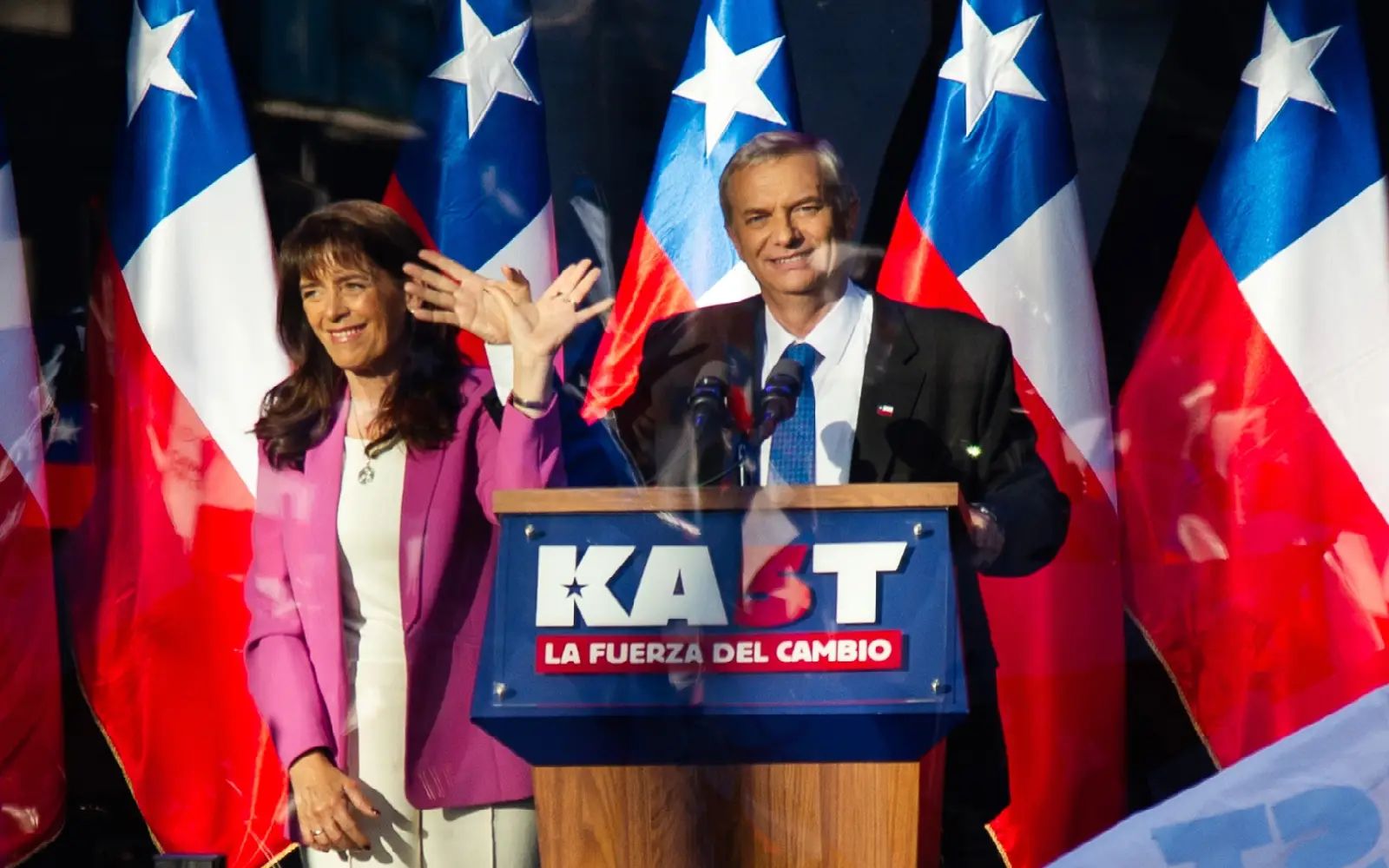
Nearly 15.6 million registered voters in Chile are set to cast ballots. Polls will close at 6 pm local time (2100 GMT), pending voter lines, with initial results expected soon after.
The runoff pits Jose Antonio Kast, from the far-right Republican Party that he founded, against Jeannette Jara, the incumbent leftist government’s coalition candidate from the Communist Party.
While Jara won November’s first round with 26.85% of the vote, Kast beat out an array of right-wing candidates to finish second with 23.92%. Most of the voters who supported those candidates are projected to go for Kast, which would give him more than 50% of the vote and the presidency.
As the campaigns wound down, both candidates threw jabs at each other, but also focused on the main topic that has come to define the election: crime.
Speaking on Thursday from behind a clear protective barrier in the southern city of Temuco, the capital of a region rattled by conflict between Indigenous Mapuche groups and the government, Kast described a country in chaos and said he would restore order.
“This government caused chaos, this government caused disorder, this government caused insecurity,” the 59-year-old lawyer said. “We’re going to do the opposite, we’re going to create order, security and trust.”
While Chile remains one of the safest countries in Latin America, a recent surge in organized crime and immigration has rattled the electorate and become the main concern among voters.
The issue quickly became a thorn in the side of leftist President Gabriel Boric, who rose to power on a wave of progressive optimism following widespread protests against inequality and promises of drafting a new constitution.
Antonia Moreno, 21, said she would vote for Jara but did not think it likely she would win.
“Regretfully we’ll be part of those countries where the far-right gains in Congress and the executive branch,” she said.
A Kast victory is likely to be cheered by investors who are hoping that a market-friendly government will accelerate economic reforms, including deregulation and changes to the copper-rich country’s pension system and capital markets.