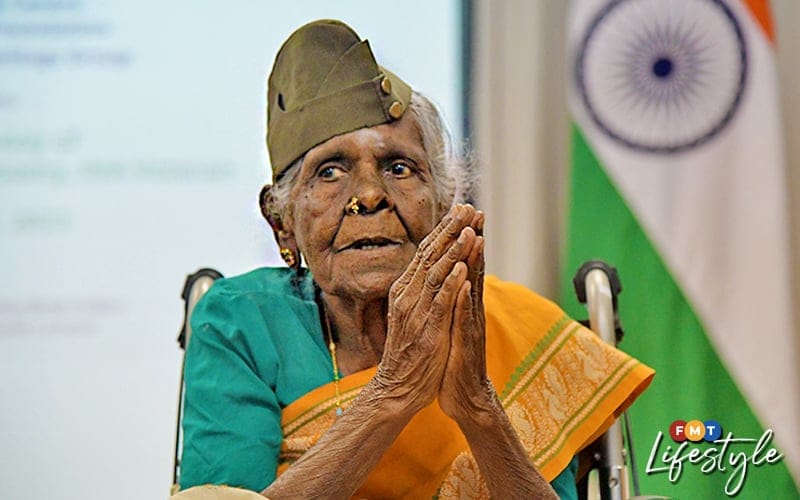
She has seen much during her life and is regarded by many as a prominent figure in the local Indian community.
But ask her to tell you the story of her life, and you will be greeted with a beaming smile as she wears on her head what is unmistakably a military side cap.
What would surprise you even more is that this good-natured matriarch, who is now enjoying her twilight years, was once a soldier trained in the usage of all sorts of firearms.
She is always happy to tell people about her experiences, and she reveals proudly that she served under the command of Netaji Bose, a name known to Indians here and abroad.
An interesting figure in the struggle for Indian independence, Bose was a contemporary of Mahatma Gandhi who shared his dream of an India free from British rule.
But unlike the pacifistic Gandhi, Bose believed that India could only be free through the force of arms.
To accomplish this, he founded the Indian National Army in 1943, albeit with the support of the Japanese during the Second World War.
He did not live to see Indian independence, however, dying in a plane crash in Taiwan two years later.
Gandhi then led India to freedom in 1947.
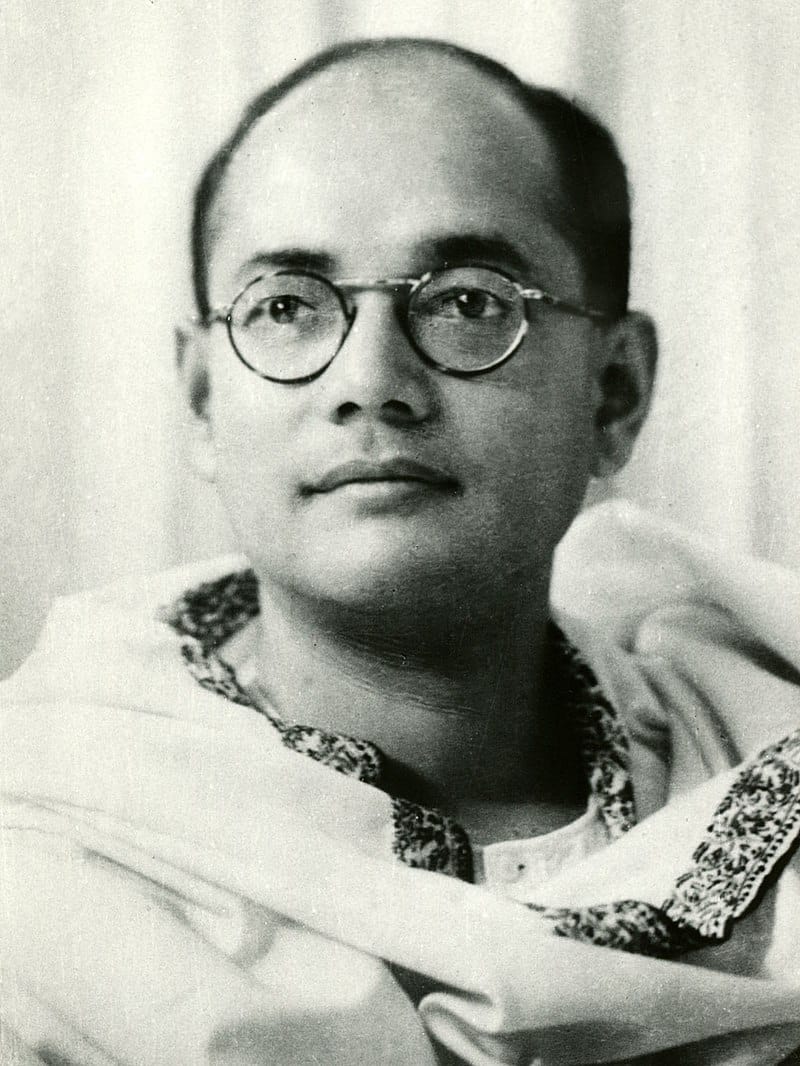
Whatever one may think of his actions, Bose remains a highly respected figure in the Indian community, and to Anjalai, he was nothing short of a good man.
Speaking to FMT at her 101st birthday celebration, Anjali, still donning her side cap, spoke of her life when living in Sentul, Kuala Lumpur.
Her father was an anti-malaria supervisor working for the local health department, but like most Indian children of the time, Anjalai was unable to complete her education.
She was 21 years old when the Japanese invaded Malaya and it was then that she saw the most unusual sights: Indian women marching in uniform.
These women belonged to the Rani of Jhansi Regiment; the Women’s Regiment of the Indian National Army founded by Bose.
Inspired by the sight, Anjalai decided to leave everything behind and join their ranks, in the hopes of discarding the yoke of British colonialism from the Indian people.
She was first sent to Singapore for basic military training, and it was there that she learnt how to use and fire various firearms.
“I was trained to use rifles, the Tommy gun and the Sten gun,” she fondly recalled, before going on to talk about her subsequent deployment to Burma.
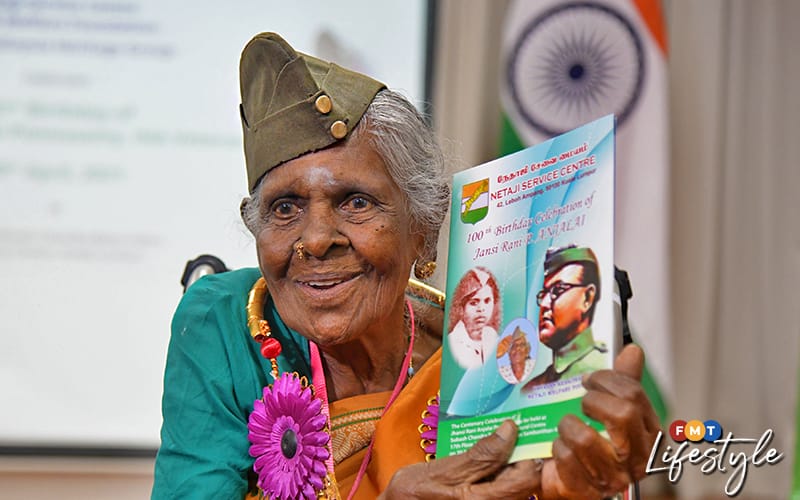
Throughout this time, Bose was a constant figure around the camp of the regiment, and he treated each and every one of the women like his own daughter.
Anjalai remembers how protective he was of the women under his command, and that he used his authority to protect them from harassment from Japanese soldiers.
She also clearly recalled an episode during her time in Burma, when the Japanese top brass questioned Bose about his decision to enlist women.
“The Japanese asked him, ‘So, you brought these women here. What exactly can they do?’” said Anjalai, letting out a little chuckle.
“Bose simply responded, ‘Ask them what they can do. They will speak for themselves.’”
So the Japanese officer issued a challenge. And sure enough, garbed in uniform and bearing their heavy military kit on their backs, Anjalai and her comrades proceeded to charge across a long distance, crossing hilly jungles.
By the time the ladies had completed the challenge, the Japanese officers were stunned but ultimately impressed.
For their efforts, the regiment was afforded the luxury of mutton and milk in their rations, of which Bose ensured every soldier received their fair share.
“He was like a friend to us,” she said. “He was very strict with the army rationing.”
She recalled another incident when Bose was given two bananas instead of one, due to his being an army officer.
Bose immediately rejected the second banana, reasoning that if his soldiers received only one, then he too should only receive one.
“He respected us like we were his own children. He took care of us, protected us and because of him, no one got hurt,” Anjalai said.
It seemed that while he was aware of the Japanese military’s atrocities, Indian independence was all that ultimately mattered to Bose.
Despite Gandhi’s mutual respect for Bose, this was where they differed, with the former disagreeing with his decision to turn to one imperialist power to expel another imperialist power.
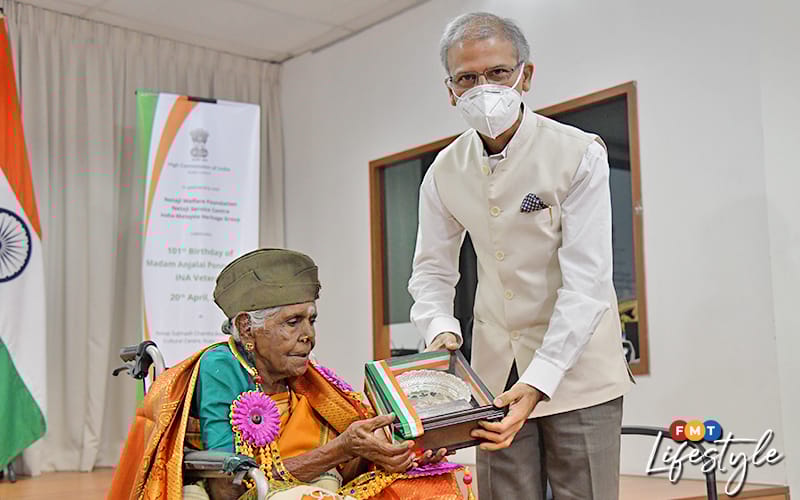
After the war ended with Japanese defeat, the Indian National Army was disbanded and thankfully, Anjalai returned home safely to continue her life here in Malaysia.
And during her lifetime, she has had the privilege of seeing both Malaysia and India gain independence from the British to become nations of their own.
These days, Anjalai is happy to stay at home, still willing to help with simple house chores despite being wheelchair-bound after a traffic accident.
She happily attributes her longevity to her vegetarian diet and daily consumption of fresh milk, pointing out that her own mother lived until she was 105.
In any case, Anjalai is certainly one Malaysian with a long story to tell, one that bridges both Malaysia and India.