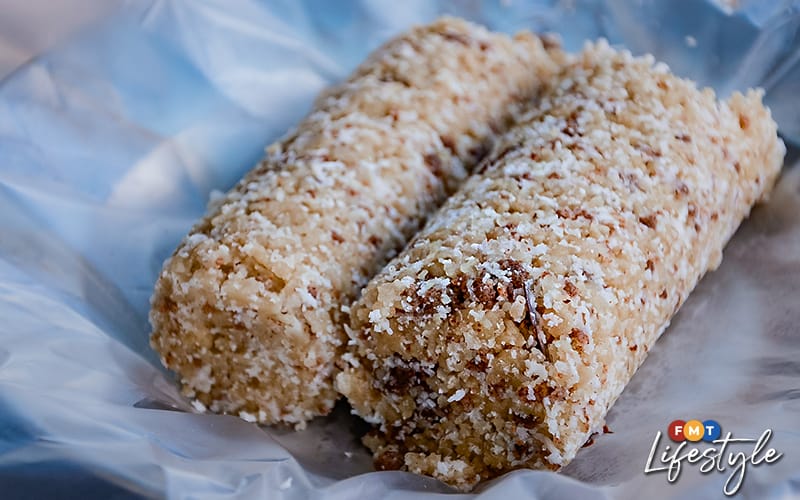
For the uninitiated, puttu is a cylinder-shaped steamed treat that can be enjoyed sweet or savoury. And from his unassuming van, 78-year-old Rajapoomy K dishes up not one, not two, but four varieties – rice, wheat, millet, and sweet.
Old-timers might remember Uncle Poomy, as he is fondly known, for his roadside stall that sold sweet hoppers, pal appam, thosai and capati in years past.
Today, he runs his business Poomy’s Kitchen from this van, where he has taught his worker to make puttu from scratch.
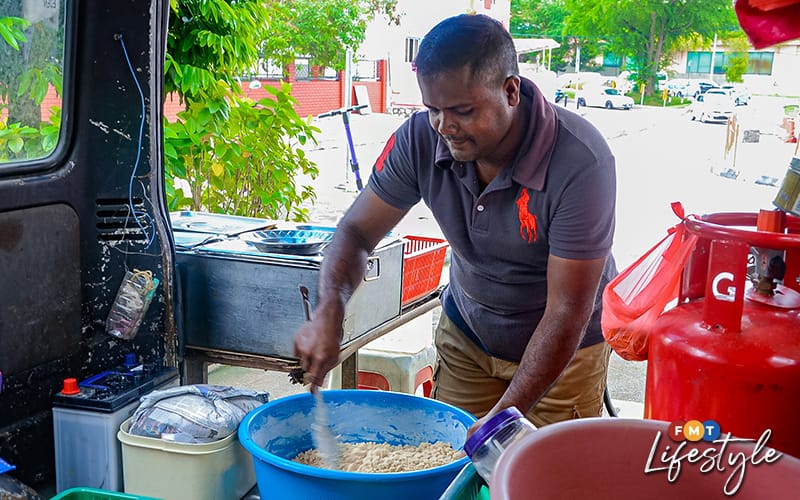
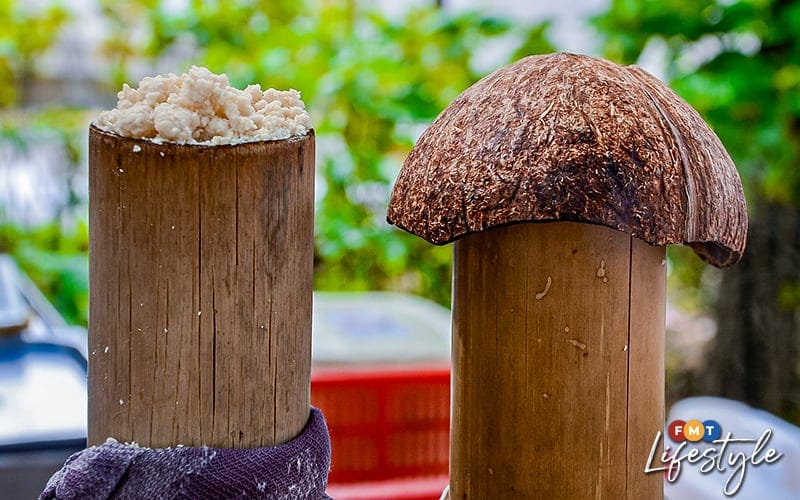
That delicious aroma when it is served? It’s bamboo. Customers are often drawn to the fragrance that permeates the snack thanks to the old-school bamboo puttu maker Rajapoomy still uses today.
It looks like a simple process, but don’t be fooled: making puttu is an art form. Flour, sugar and salt are poured into a bowl, before hot water is slowly added to create a crumbly batter.
The mixture is then stuffed into the bamboo steamer and left to cook atop a stove for a while.
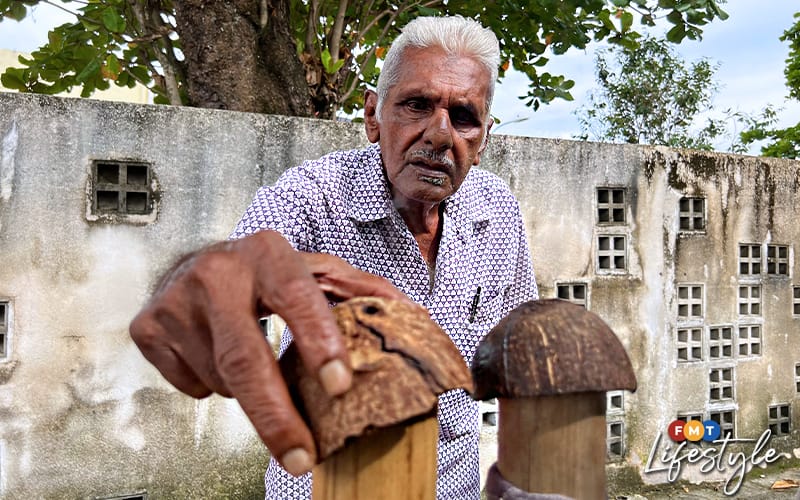
Several minutes later, the worker adds grated coconut and covers the steamer with a coconut husk. Eventually, he delicately pushes the small cakes out of the bamboo by hand, allowing each roll of puttu to remain intact. Beautiful.
“It’s important to get the texture right,” Rajapoomy told FMT as he supervised the making of the puttu. “The tossing of the flour is an important method to get that crumbly texture.”
The puttu varieties are determined by the types of flour used – wheat, millet, or rice. FMT tried all three, and they were delicious as you might expect, soft and melt-in-your-mouth.
While the millet puttu is the healthiest, Rajapoomy said it can be too bland for some people, so feel free to add curry, sambal or chutney to enhance its flavour.
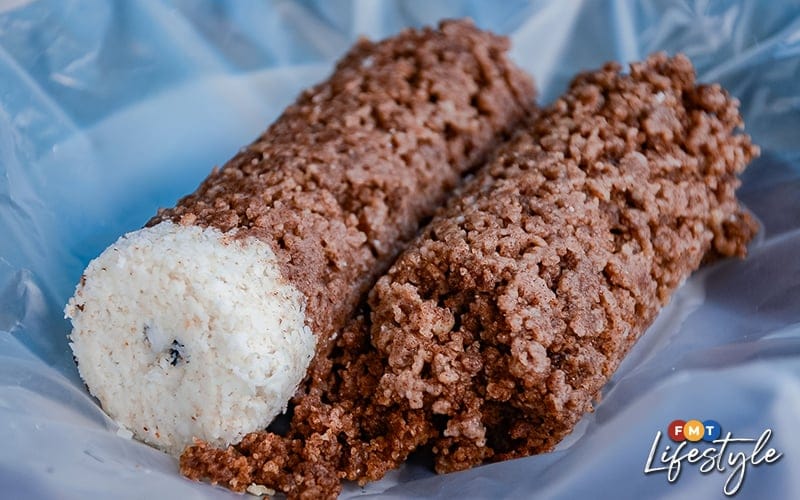
Then there’s the “dessert” version, the sweet puttu, which is made with a combination of all three flours. Despite its name, it isn’t too sweet – although this will depend on your palate – and is, therefore, tasty on its own.
For those who think it’s not sweet enough, feel free to add more brown sugar. It’s also terrific with fruit, Rajapoomy said, adding that many people – himself included – even enjoy it with durian!
Asked about the future of his business, Rajapoomy smiled. His children are not keen on taking over as they’re busy with their own jobs.
“I’m 78. While my worker is still around and can help me, I’ll continue selling puttu. If not, I’ll just have to close my business,” he said simply.
Each serving of two pieces is priced at RM4.
Poomy’s Kitchen
Lorong Ara Kiri 3,
Bangsar, Kuala Lumpur
Business hours: 3pm-9pm (Mondays to Saturdays)
Contact: 011-3902 8836