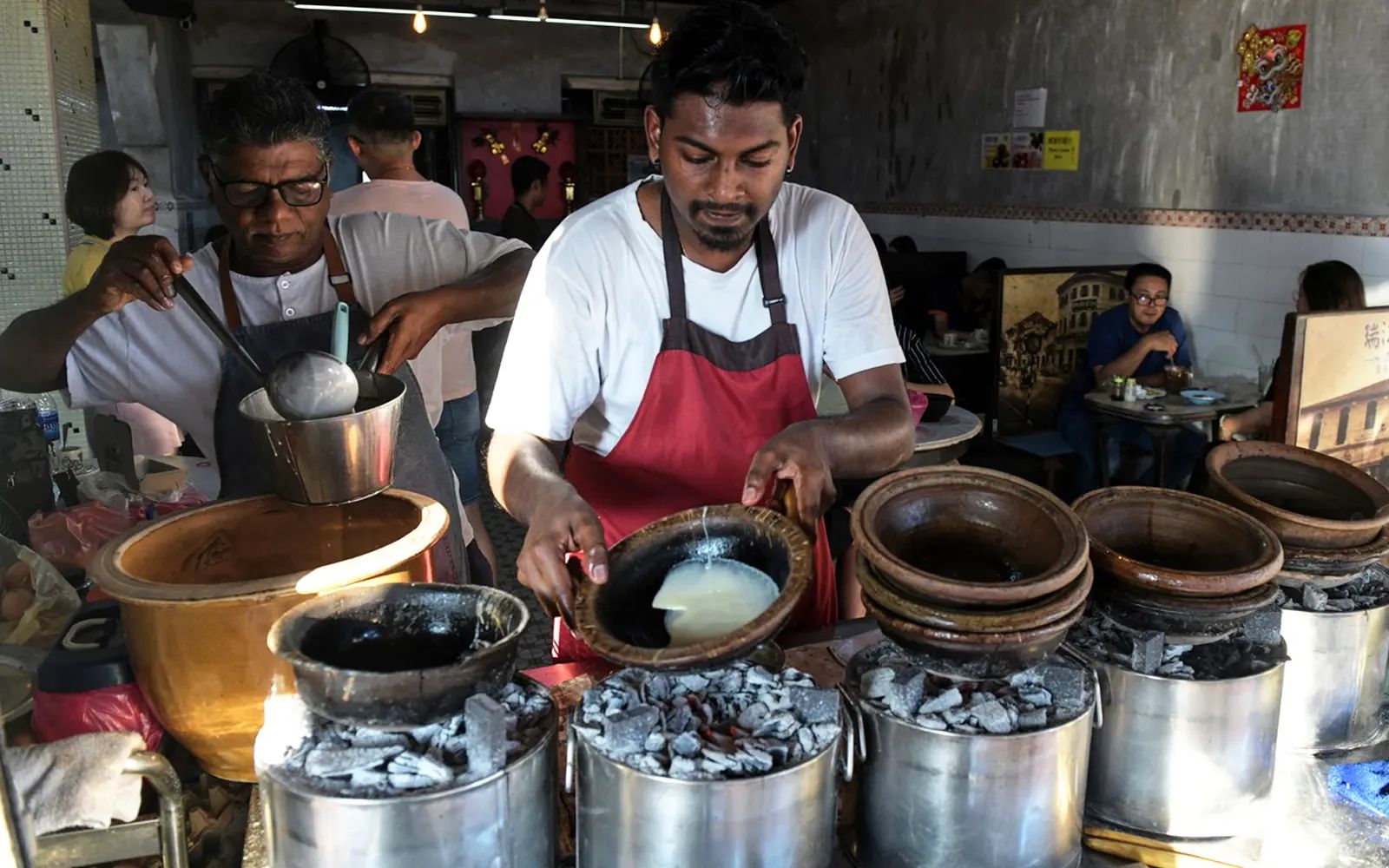
Last year, Ravi’s Claypot Appom Manis on Jalan Burma earned a Michelin Bib Gourmand recognition, shining a global spotlight on a family-run business that has been serving the traditional delicacy for over a century.
The accolade celebrates eateries known for exceptional food that remains affordable and accessible. Yes, in spite of this success, little has changed at the humble stall.
Every morning from 6am, customers crowd the coffee shop where 65-year-old R Neelamegan, fondly known as Ravi, spends nearly four hours standing over charcoal flames preparing fluffy, fragrant appam using claypots imported from India.
It’s not uncommon to see long queues of locals and tourists eager to get a taste of the soft, slightly sweet delicacy, which has become increasingly rare to find prepared the traditional way.
Although modern methods allow appam to be cooked using gas stoves and ordinary pans, Ravi insists on sticking to charcoal and claypots to preserve the original flavour and aroma.
The business was started in 1922 by his father, N Rajagopal, who came from Tamil Nadu in India around the same time the coffee shop first opened.
“I’m the second generation and took over the business from my brother about 35 years ago. We’ve never moved from this spot since my late father started the business,” Ravi told Bernama.
The father of five, who speaks fluent Hokkien with customers, said the recipe has evolved slightly over the years but still relies on core ingredients such as rice flour, sugar, eggs and coconut milk.
“The rice-flour batter is prepared by hand the night before so it rises properly. Early in the morning, I mix in eggs, sugar and fresh coconut milk bought from the nearby market,” he shared.
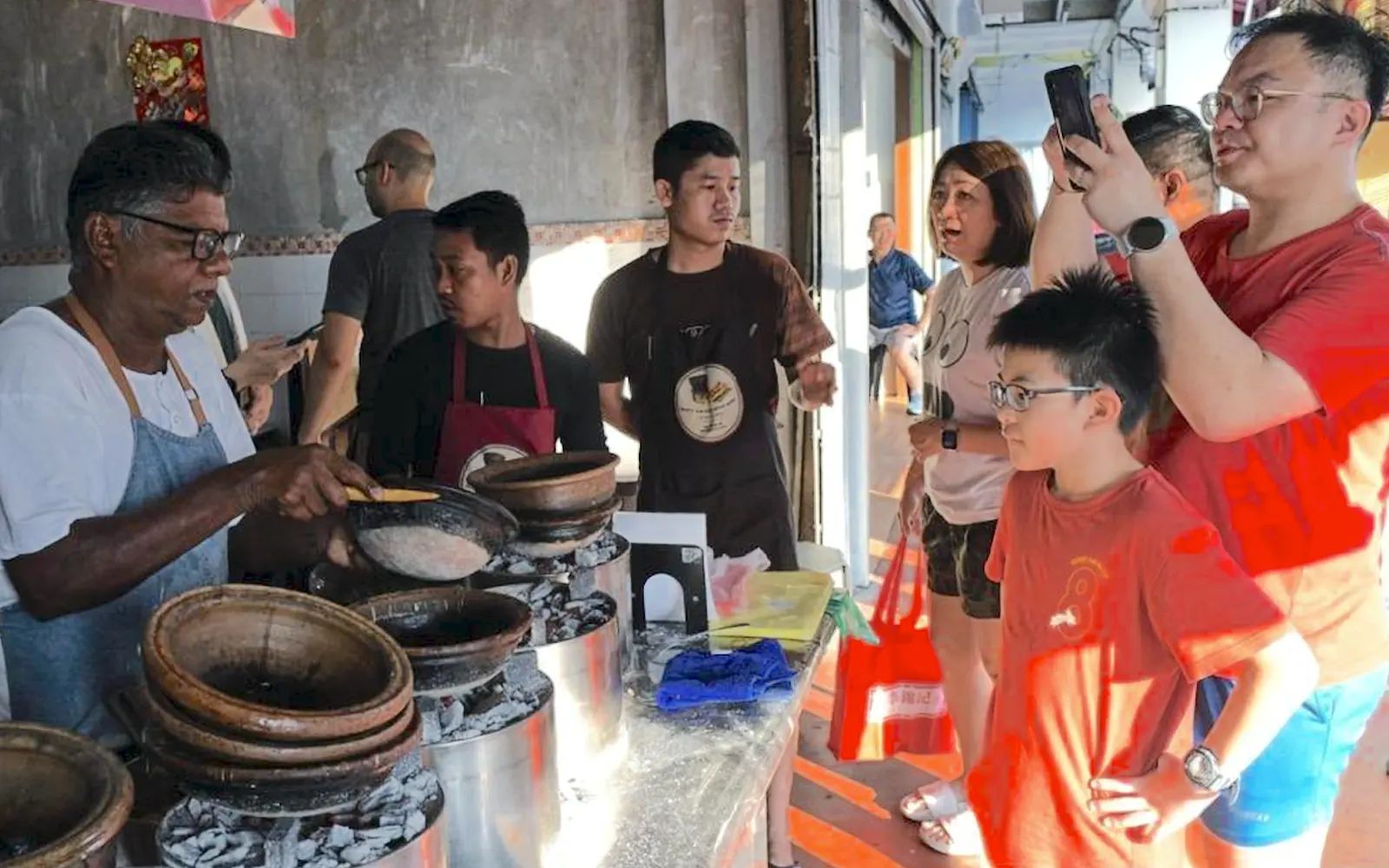
The stall uses between 3kg and 4kg of flour daily, and sells about 500 to 700 pieces of appam a day, with even higher demand on weekends.
The work requires delicate expertise and patience, especially while standing for hours in front of intense heat while controlling the charcoal embers.
Ravi, who proudly shared that they have been invited several times to prepare appam for the Pahang palace, believes the treat represents more than just breakfast.
He describes it as a quiet symbol of Penang’s multicultural community, where customers from all backgrounds gather around the same humble snack.
The family legacy is now being passed down to his fourth child, 30-year-old N Balasivan, who has stepped in to continue the tradition.
Balasivan said the Michelin Bib Gourmand recognition made him even more determined to preserve the stall’s authenticity.
“Fewer people are using claypots nowadays, and we still have to import them from India. After receiving the recognition, I felt an even greater responsibility to continue this tradition,” he said.