
When it comes to the intricate art of food making, there’s no better source for learning than one’s own family. In most local households, this time-honoured task would fall upon the matriarch of the home – be it one’s grandmother, mother, or, in some instances, a kitchen-savvy aunt.
But sharing the heart of the home with domineering relatives can come with pitfalls. Culinary beginners take heart – all Malaysian aunties, regardless of ethnicity or background, tend to be the same: nurturing and supportive at first, before turning into Gordon Ramsay.
Here are the six “Asian aunty” phases you should look out for, lest you wish to be barred from entering their kitchen ever again!
Phase 1
This refers to the giddy smile and excitement you can see on any aunty’s face, especially if you are female and express the desire to learn how to cook.
If said aunty does not have a bad hip or back, she would be doing the Irish jig before rushing you into the kitchen. Why? Simply because your family’s honour is dependent on that first fish you fry at your future in-laws’ house.
Watch out for shining eyes, an ear-to-ear smile, and enthusiastic chattering.
Phase 2
Your first one-on-one cooking class begins. The day initially unfolds like a scene from a classic ’70s or ’80s sitcom – think “The Brady Bunch” or “Full House” – complete with the Carpenters’ “Top of the World” playing in the background.
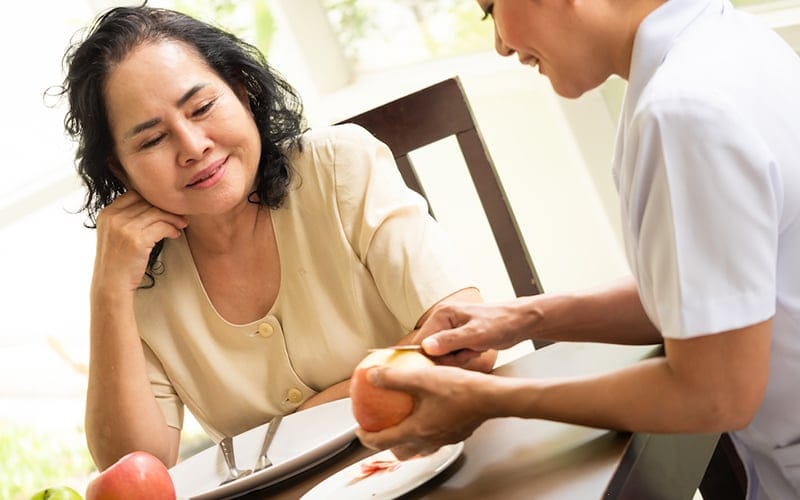
Aunty chats gaily, making jokes that force you to cough out a laugh, while reminiscing on her own experience of when she first learnt to cook. This is indeed a special time: you suddenly feel so connected to her, and food brings you closer.
Don’t get too cocky, though, because the fun is about to REALLY begin…
Phase 3
Alas, an aunty will be an aunty. You will not be buddies for long, and the cushy sitcom scene starts to show wear and tear at the seams.
It starts with a loud “tsk” and mum/aunty rushing to your side. Soon, she is hovering over your shoulder, tut-tutting at every turn.
On your part, you start to sweat. Your hands begin to tremble. Your eyes keep darting towards her. You pick up the knife, and suddenly: “No. Not like that! Too thick. Move, move. Let me do it!”
Signs to look out for include furrowed brows, eye rolling, head shaking, and use of phrases such as “so simple also don’t know” and “when I was your age”.
Phase 4
From the Carpenters soundtrack in phase two, you now have heavy-metal drums banging in the background. You are thinking thoughts such as “I KNEW this was a bad idea!” and “I should have opted for professional cooking classes instead”.
Mum or aunty, by this stage, will be lamenting your future partner’s luck for having to eat out every day, or having to lower their standards to force down your fare.
Take note of the veins popping out in aunty’s neck or forehead, and steer clear of her cooking station – the “red zone”.
Phase 5
Some aunties might omit this stage and go straight to the last one, even though this is often the phase that traumatises you and prevents you from cooking ever again.
It involves them snatching things out of your hand, pushing you aside, or unrelentingly telling you you’re doing it wrong.

For example, your curry is too thick and is getting burnt. You forgot to put in the coconut milk. She huffs to the fridge, looks for the santan, and finds only dessicated coconut.
She starts to blend it, and you make the wrong move by telling her you will do it. She flings coconut shreds at you, and, in a valiant attempt to dodge the incoming projectiles, burn yourself on the edge of the pot.
Hyperbolic, perhaps, but you get the picture: you’re scarred – physically and emotionally.
Phase 6
The final phase is the full-on aunty or Gordon Ramsay mode. All you hear now is loud shouting. The next thing you know, you are banned from entering the kitchen ever again.
This story of your first-ever cooking experience will be told to elderly friends and scornful members of extended family for generations.
So there you go…
These are the six phases Asian aunties are capable of going through in the kitchen… at least based on this writer’s experience.
Of course, the above is entirely satirical; the truth is, life as a Malaysian, especially for girls and women, would not be the same without mums and aunties teaching you.
And, whether the end result is delicious or not, time spent together in the kitchen and at the dining table thereafter can only bring families closer.
This article was originally written by Azrene Jasmine for butterkicap.com, a food and culture platform and community that enables anyone to experience Malaysia through stories of its people, food and places.