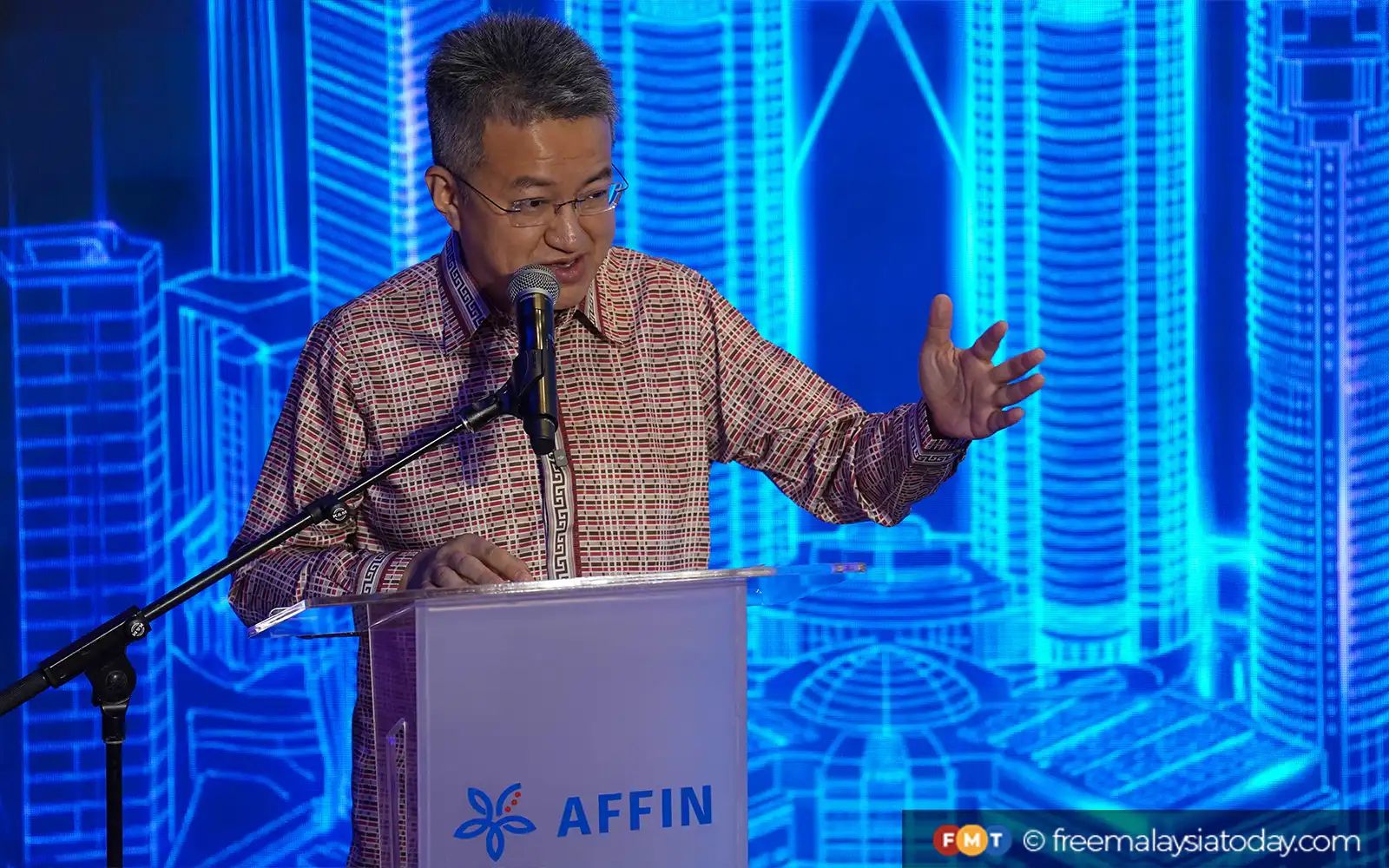
Liew said the creation of the national oil company was an example of how crises could spur long-term strategic reforms.
“One of the decisions the Malaysian leaders at that time made was to set up Petronas.
“This was because they realised that without a national petroleum company, and by solely relying on foreign oil corporations operating on our shores, we will be hit the same way when the next crisis happens,” he said at the Affin Market Outlook Conference 2026 here.
The 1973-1974 crisis – triggered by an embargo imposed by the Organization of Arab Petroleum Exporting Countries during the Arab-Israeli war – caused oil prices to quadruple and pushed the global economy into recession.
Liew said Malaysia is now benefitting through Petronas and its downstream operations. He said the country must take a “build-back-better” approach amid uncertainty arising from the US-Iran conflict by identifying the desired post-crisis outcome for Malaysia and then working backward to determine the necessary steps.
Last month, Petronas said fuel supply at its stations nationwide was expected to last until the end of June, while Prime Minister Anwar Ibrahim is expected to announce further measures in mid-May to ensure continued supply stability.
The national oil company supplies about 50% of the country’s fuel needs through its public-listed subsidiary, Petronas Dagangan Bhd; the balance is supplied by other oil firms operating in Malaysia.
Liew also cited Petronas’s methanol facilities in Labuan, noting the two plants combined form the largest methanol production complex in the world.
A long way to go
Liew said the current energy crunch could persist for another 12 to 18 months, even if the conflict in West Asia is resolved.
He warned that Malaysia could not remain dependent on petroleum indefinitely, adding that the country needed to rethink the use of private cars, strengthen public transport and review broader fuel consumption patterns to reduce long-term vulnerabilities.