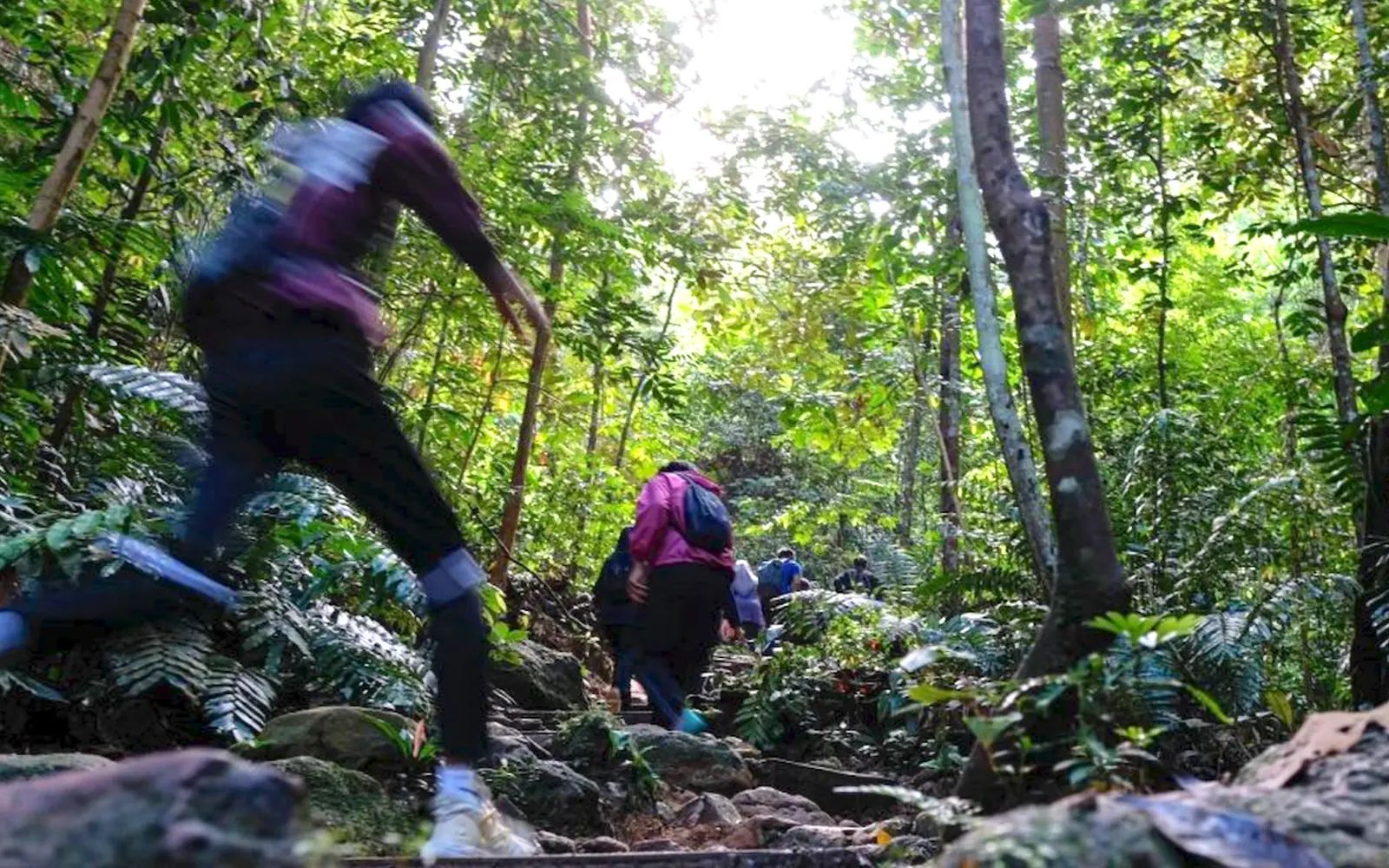
What rarely appears are the blisters, exhaustion, sudden weather changes, and difficult decisions that can determine whether a hike ends safely.
As hiking continues to attract new enthusiasts, some outdoor experts are concerned that the gap between perception and reality may be contributing to a rise in emergencies on the trail.
Mountain Medicine Society Malaysia president Muhamad Aliff Abdullah believes social media has fuelled a culture where some hikers feel pressured to chase peaks, complete challenging routes, or tick mountains off a personal list without fully understanding the risks involved.
He said social media has also contributed to the rise of what some outdoor enthusiasts call “express hikers” – people eager to collect summits and complete increasingly demanding routes, often driven by a fear of missing out.
“Many people see hiking as a low-risk activity, while the mountain environment can change very quickly and unpredictably,” he told Bernama.
“Problems arise when social media doesn’t reflect the reality of the challenge, but only shows the beautiful end result.”
According to Aliff, some hikers attempt difficult routes without adequate experience, physical preparation or an honest assessment of their own capabilities. Extreme fatigue, hypothermia and acute mountain sickness can impair judgement and make emergencies more likely.
An expert in wilderness medicine and high-altitude hiking, Aliff said incidents in the mountains are rarely caused by a single mistake. Instead, they often result from a combination of factors, including inadequate preparation, poor fitness levels, difficult terrain, and lapses in decision-making.
Among the most common mistakes are breaking away from a group, refusing to turn back when conditions deteriorate, and relying too heavily on gadgets without basic navigation or survival skills.
Trails and taboos
Aliff also noted that discussions about hiking safety in Malaysia often intersect with longstanding beliefs surrounding forests and mountains.
Stories of hikers becoming disoriented after ignoring certain taboos or experiencing what some describe as “mystical disturbances” remain common in outdoor circles.
While he believes such traditions should be respected as part of local culture, he said many incidents can often be explained through science.
“Many traditional taboos, such as not speaking loudly or not leaving the group, actually carry important safety elements,” he said.
“However, what is often seen as a mystical disturbance is usually caused by dehydration, panic, lack of sleep, reduced oxygen to the brain, or conditions such as high-altitude cerebral oedema.”
According to him, exhaustion and stress can affect a person’s judgement and perception, particularly in unfamiliar environments.

The conversation around hiking safety has gained renewed attention following several recent tragedies. As of press time, search and rescue efforts are ongoing for Jaslinda Saludin, 49, who went missing while hiking at Gunung Batu Putih in Tapah last Saturday.
Earlier this month, 19-year-old Nur Izzati Humaira Azizul went missing while descending Bukit Changkat Asa in Hulu Bernam, Selangor. Her body was recovered four days later.
Last October, Mustaqqeem Mansoor, 34, died from hypothermia during an expedition at Gunung Liang Barat in Perak.
Meanwhile, the disappearance of Mohammad Ashraf Hassan, 29, during the Gopeng Ultra Trail event in 2019 remains unresolved.
Overeagerness, underestimation
For mountain guide Norimah Abd Karim, social media has changed not only how people document hikes but sometimes how they approach them.
With more than a decade of outdoor experience, including completing the Trans Titiwangsa expedition, she said some of the biggest challenges involve hikers abandoning basic safety practices in their eagerness to reach the summit.
“Some hikers ignore the buddy system because they want to move faster or reach the peak first,” she said.
She has also observed a growing tendency among some hikers to carry minimal equipment because they want to resemble experienced trail runners they see online.
“There are hikers who focus more on getting interesting content that they are willing to take risks and neglect their own safety,” she added.
Norimah further warned against underestimating the demands of expeditions that involve covering multiple peaks in a single trip, which require significant physical and mental preparation.
“Going with friends on what is expected to be a leisurely hiking experience often turns out differently when faced with the real situation in the field,” she cautioned.
For experienced hikers, the lesson is a simple one: preparation, patience and knowing when to turn back can be just as important as reaching the summit.
“Mountains cannot be challenged with ego,” Aliff concluded.