In our society, there is still a stigma around mental health, and seeing a therapist means that something has gone terribly wrong.
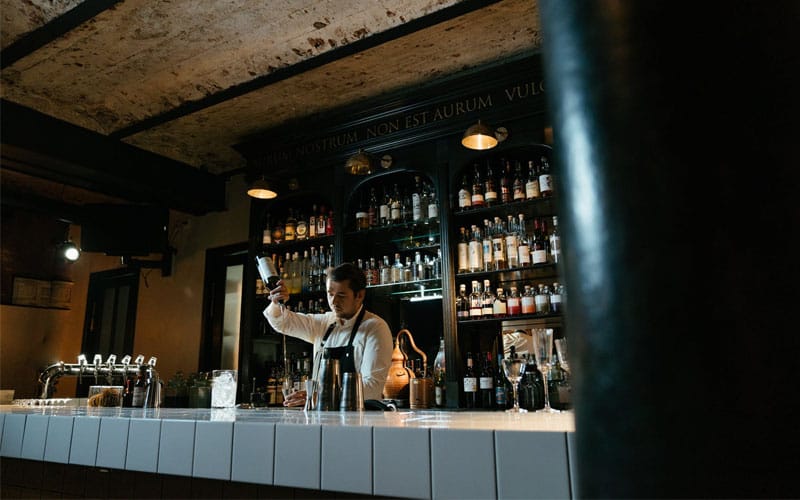
In the most stripped-down conversation with award-winning bartender and pioneer in Malaysia’s cocktail scene, Angel Ng Ji, she shares an honest account of how the nature of the service industry can take a toll on a person’s psyche.
This is in hopes of shedding light on the harsh realities of the hospitality industry.
“A common thing in the industry is to say, ‘Suck it up’, meaning suppress it, and eventually, something will burst,” says Angel.
“We need to accept the fact that mental health problems are a genuine health issue. We need to acknowledge it so that we do not pass down all this toxic influence to the next generation.”

Let’s start with the nature of the industry. What aspect of it makes it so taxing?
The long hours often involve alcohol, handling different client personalities, and always having to put on a smile even though, say, there are issues at home.
It is very common to eventually have a mental breakdown because you don’t have a work-life balance.
“Always put on a smile, even though there are issues at home.” Let’s talk more about that.
How I cope is through compartmentalisation. It is a confusing, mentally-contradicting mind game. It’s really up to your internal strength and it can actually go both ways.
Can you share how intense this industry can be? Have you ever broken down before?
The last time I genuinely broke down was five to six years ago. That night, I was the only person behind the bar serving at least 30 guests.
One of the guests waited too long and I served the wrong drink. What came next threw me off guard. She screamed at my face, shouted a lot of nasty words, and walked off.
It broke me. The floor manager asked me to take a smoke and walk it off. I came back, wiped away my tears and came back with a smile, and continued on.
Thinking back, when the manager said to “walk it off”, how much can you really “walk off”?
Much later on, when I started learning about body language to improve my customer service, I recalled that incident and remembered that she’d just had an argument with her partner.
However, when is it ever right to throw a tantrum and take it out on service staff because you are having a bad day? Is it because you’re paying for service charges?
I would never forget how she screamed.
To not let this take its mental toll on you, it is important to start learning how to read body language. If the customer is able to scream at you for something that can be easily rectified then it is definitely not fully on you. You need to tell yourself that to bounce back.

As customers, how do you think mutual respect is earned?
It’s actually not uncommon for parents to tell their kids in front of service staff that “If you don’t work hard, you will end up like him.” Parents, please stop doing that.
It’s a tough industry but many of us fight on because we love it. A little appreciation and kindness go a long way.
What triggered your desire to open this conversation around mental health?
I never had a work-life balance since I was 17, which is when I started working.
In my last major project, I would work seven days a week, 12 to 14 hours straight. I would settle down to sleep at 4am, wake up by 10 am, and I’m in the outlet before noon. This continued every single day.
I was just determined to prove myself. My parents used to tell me that if it’s not 100%, it’s not good enough.
I lost a lot of weight and worked extremely hard to escape the mental torment. I drank more than I ever had as an escape, and that should have been a red flag.
Then, I broke. I took a step back by taking on a management role, away from operations, thinking all will be better, but nothing changed. I was exhausted mentally and physically.
Soon after, I left the company. That was the hardest thing I ever did. To walk away from something so dear to my heart as I had built it from the ground up into an establishment.
But I needed to get out.

And now, two years later, how is your mental outlook?
My firstborn really sped up the work-life balance process. He gave me a stronger reason to find a balance.
I have regular therapy sessions and stumbled into IO Psychology. It’s a study of human behaviour in a workplace environment and how to increase productivity with a better healthier mindset.
“The service industry tends to exasperate mental health”. What do you think?
This industry can bring you the highest of highs due to the compliments and accolades, but it also induces the lowest of lows because you realise how broken our society can be.
It is a common scene for the service staff to clean up after their drunk customers. As a professional, you understand that they are drunk, but you see the inner suppressions of their daily lifestyle surface.
What do you wish people knew about the service industry?
A common thing customers would say is, ”Being a bartender is so fun!”
I’m so tempted to say, “It’s not all fun and games. Behind this smile is a real person with real problems but we put on a show because it is our job to serve you with a place to relax and unwind after a long day.”
But I say nothing. I wish I could.
If our job is to help customers feel better, then who is going to help us?
This article first appeared on Set the Tables.
Set the Tables is positioned to inspire and educate those already in the industry as much as the aspiring reader who dreams of a future in the food business, and maybe even the merely curious tantalised by the vast and irresistible universe of food and drink.