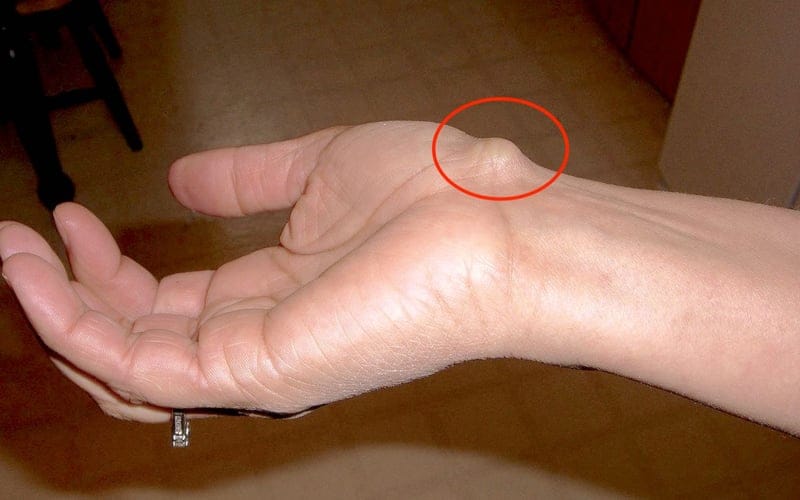
Leilani (not her real name) has a musculoskeletal condition known as a ganglion cyst. She initially experienced it in her left wrist in 2018, but it resolved itself over a nine-month period. Then she had a recurrence of the condition.
A ganglion or “bible cyst” is a benign swelling or bulge that often appears on or around the joints and tendons of the hand or foot. These are filled with a gelatinous mucoid material, and present as a subcutaneous lump or nodule.
It is called a bible cyst because a common home remedy in olden days was to hit the cyst with a bible to make it rupture or pop.
The approximate size of a ganglion is between 1cm and 3cm, but this could change over time. It could also disappear completely.
She was told that 70% of such cysts are found on the back of the hand, while 20% are on the palm area of the wrist. The other 10% could arise in areas such as the fingers, ankle or feet.
Ganglion cysts account for 60-70% of soft-tissue masses found in the hand and wrist. They are most commonly found in women between the ages of 20 and 50, though they can form at any age.
Women are three times more likely to develop a ganglion cyst than men. Although the exact cause is known, they are believed to arise from repetitive micro-trauma resulting in a degeneration of connective tissue. This could explain why they are frequently encountered among gymnasts, due to secondary repetitive trauma and stress to the wrist joints.
Some 65% of cases are painful, especially in the initial stages, with tenderness or weakness exacerbated by wrist motion. Although the most common reason for people to seek medical attention is its size, there is no clear association between this factor and the pain experienced.
Activities that cause increased stress on Leilani’s wrist are often painful, especially as she does her bench presses, push-ups, and other exercises that involve loaded wrist extensions.

Most ganglion cysts can be diagnosed with a physical examination. An MRI is usually not indicated unless there is concern of a possible tumour, while an ultrasound could be used to differentiate a cyst from a vascular malformation.
When it comes to treatment, aspiration of the cyst is one option. This involves using a needle or syringe to draw the liquid material out, then injecting a steroid compound into the cavity.
While this is a simple and beneficial option for acute management, it has its limitations. There is a relatively high recurrence rate, and aspiration of palm-wrist cysts is not generally performed due to their proximity to the radial artery.
Surgery is prescribed for patients with continuing symptoms where normal management methods have failed. This involves excision of the entire ganglion including the cyst, pedicle – the stem of tissue that connects it to the body – and a cuff of the adjacent joint capsule.
About a third of ganglion cysts disappear without any treatment at all. If the ganglion is asymptomatic, patients are reassured it is benign and could spontaneously improve.
Hitting or squashing the cyst isn’t a good solution because the force of the blow could damage surrounding tissues. Trying to pop it with a needle is unlikely to be effective and could lead to an infection.
Leilani has had her ganglion cyst surgically removed and has sought physiotherapy to restore proper function of her wrist. She advises those with wrist pain or disability to seek medical attention and physiotherapy to establish a treatment plan.
TELEME Healing Life Stories is a collection of inspirational stories of how ordinary people triumph over their health conditions and recover to lead a healthier life. Email [email protected] to share your story.
Click here to read more health educational articles or download the app to chat with a health practitioner.