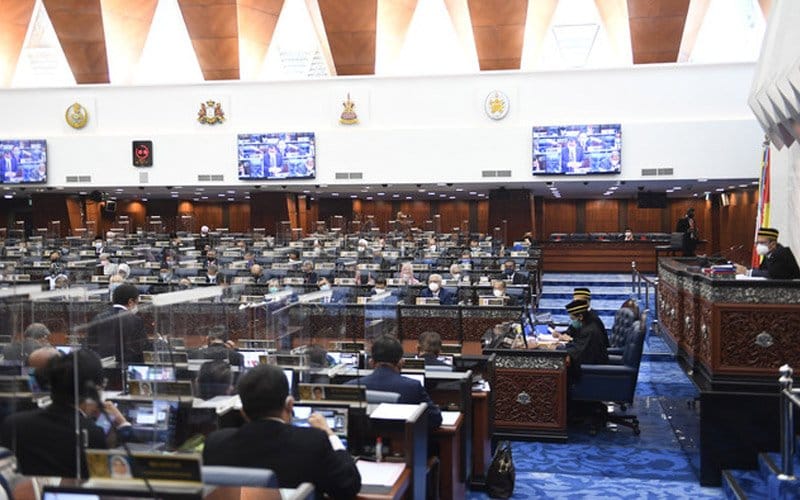
This issue rose again after the Malaysia Agreement 1963 (MA63) special council endorsed restoring the 35% share, which Prime Minister Ismail Sabri Yaakob said would be discussed by the government.
FMT spoke to Awang Azman Pawi of Universiti Malaya to shed more light behind the history and possible implications of this proposal.
How did this demand come about?
When Malaysia was formed in 1963, 35% of the then 159 parliamentary seats in the Dewan Rakyat were allocated to Singapore, Sabah and Sarawak, Awang Azman said.
Of the total, 104 seats were allocated to Peninsular Malaysia, 24 to Sarawak, 16 to Sabah, and 15 to Singapore.
After Singapore left in 1965, its seats were not allocated to East Malaysia but were distributed in the Peninsula on the basis that it had more residents and states at the time.
In the current Parliament, 166 (or 75%) of the 222 seats are in Peninsular Malaysia while the remaining 25%, or 56 seats, are in Sarawak (31) and Sabah (25).
Awang Azman said as time progressed and the Barisan Nasional government grew stronger, the call by the eastern states for a 35% share was drowned out by national issues.
However, as BN’s grasp on Putrajaya weakened, Sabah and Sarawak finally received more attention from the Najib Razak government, which provided greater Cabinet representation for the region.
“Najib then started decentralising administrative power from Putrajaya to Sarawak, a process which took place in stages and underlined the importance of looking after Sarawak since it was a political ‘fixed deposit’,” said Awang Azman.
He said negotiations for the 35% share to be returned began under Najib, which was confirmed by a parliamentary select committee in 2012.
The matter is gaining traction again now that Sarawak, in particular, is growing in political power. Awang Azman described the Bornean state ruled by Gabungan Parti Sarawak (GPS) as a kingmaker for the federal government.
This became especially apparent after the Pakatan Harapan government collapsed and GPS lent its support to the Muhyiddin Yassin-led Perikatan Nasional government. “GPS was able to help guarantee political stability while ensuring that Sarawak’s interests were taken care of.”
Why is the 35% share important?
Awang Azman said opposition to the 35% issue could be linked to political domination, with more seats for Peninsular Malaysia meaning the government would have added might.
BN’s strong reign up until the late 2000s was when Umno dominated the government, while the voices of Sabah and Sarawak seemed to be diminished.
“The importance of this 35% share is that (Sabah and Sarawak) can influence decisions in the Dewan Rakyat.
“Without this 35% share of seats, there’s concern that MPs from the peninsula can amend any part of the constitution without needing the support of Sabah and Sarawak MPs.”
Should the 35% share be restored, Awang Azman said, the way the seats are redistributed will also have a huge impact on the local politics in Sabah and Sarawak.
“There are already politicians who are urging for the distribution of the number of voters to be balanced, warning of gerrymandering and malapportionment, which would be detrimental to the democratic process of the country.”
Could this be realised before GE15?
Law minister Wan Junaidi Tuanku Jaafar did not see this as being possible. He told Malaysiakini that the Cabinet papers were still being prepared, which needed to be discussed with the Sabah and Sarawak governments as well as the Election Commission.
Only after the Cabinet agreed in principle would the government determine the scope and parameters based on the MA63 special council’s proposal.
Awang Azman said the government and opposition were both cautious due to its political implications as well as the possibility of gerrymandering and malapportionment.